
Skip to content

Free written quotesLocal crews

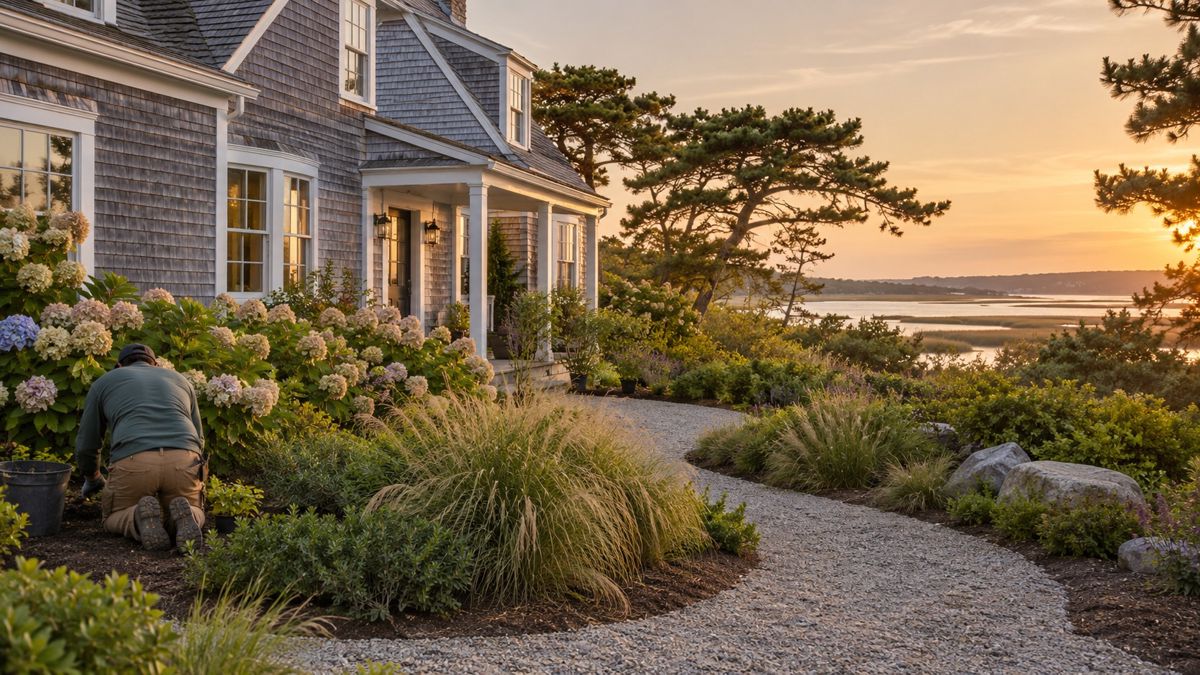
Shingled Cape Cod house with native grasses, hydrangeas and a curving stone path

Seaside cottages and river-view lots

Landscaping in Centerville, MA near beach and river

Coastal planting, patios, lawns, walls and sprinklers for Centerville yards. Request a written quote and we will confirm availability for your address.

  • Plans built around Cape Cod sand, wind and salt
  • Written quote before work begins
  • Serving Barnstable and nearby villages

Cottage lots between the beach and the river

Centerville is a village of older summer cottages, year-round family homes and quiet streets that lead toward Craigville Beach and the Centerville River. Many yards here are shaped by what surrounds them: sea breezes, sandy soil, low spots after heavy rain and a long tradition of simple, natural planting.

Landscaping that fits this setting tends to be relaxed rather than formal. Owners ask for patios that feel like part of a cottage garden, lawns that stay green without constant water and plantings that look good even in a windy spring.

Coastal exposure, flood-prone corners and frost

Close to the water, wind and salt spray are constant, and some properties lie within flood-prone zones where water can collect after storms or high tides. Route 28 runs through the village, so the neighborhoods nearby are easy to reach, but side streets can be narrow and lined with old trees.

In winter, freezing and thawing push poorly built walks and patios out of level. That is why the base under a paver surface matters so much here. A deep, compacted layer of stone, with proper edge restraint, helps a patio stay flat through the cold months. We also look at where storm runoff goes, so it does not undermine the new work.

Five ways we landscape Centerville properties

Here is how each service on this site tends to apply in a seaside setting.

  • Landscape design can bring a cottage garden feel to a plain lot, with tough, salt-wise planting and clear paths.
  • Hardscaping with pavers suits outdoor showers, entry walks and small patios close to the house.
  • Sod installation restores a sandy front yard with a lawn that can handle foot traffic and sun.
  • Retaining walls and drainage help with low spots, eroding banks and runoff that heads for the foundation.
  • Irrigation with zones for lawn and beds keeps summer drought from undoing the rest of the work.

Each can stand alone, or they can be phased over more than one season.

Material choices matter more near the water. A few principles guide the plan.

  1. Use stone, concrete pavers or composite products that handle salt and moisture.
  2. Choose fasteners and metal parts that resist corrosion.
  3. Pick plants by exposure: dune grasses and rugosa roses are examples of tough options, while tender shrubs belong in sheltered pockets.
  4. Group plants by water needs so irrigation is simple.
  5. Avoid heavy fertilizer, which can wash toward ponds and rivers.

These principles affect the quote because stronger materials and careful planting cost more up front, but they usually reduce replacement later.

Conservation rules, setbacks and your property

Many Centerville lots sit near wetlands, the river, salt marsh or coastal banks. Work in or near these areas can fall under the Massachusetts Wetlands Protection Act and local rules, which may require review before anything is dug or built. The town conservation office can tell you whether your plan needs a filing.

Flood zones and local building rules can also affect walls, patios and fire pits. Not every project triggers review, but it is wise to ask early. We will describe the work in plain terms so you can get a quick answer, and we will not start until any required approval is in hand.

Getting a quote for a Centerville yard

We serve Centerville, but we are not based there, so your request is how we confirm availability. Use the form or call (508) 555-0174.

Start with a short description of the yard and what you would like to improve. Send photos of the lawn, the planting beds and any wet or eroded areas. We follow up with questions about the water, shade and wind, and then arrange a site visit. After walking the property, we write up the scope, materials and timing. The quote explains what is included so you can compare it against any others you have collected, and you decide when to move forward.

Get a quote in Centerville

Tell us what you need and we call you back.

Step 1 of 3

What do you need?

No obligation.

Questions about Centerville

What landscaping suits an older Centerville cottage?

Simple, natural designs usually suit these houses, such as stone or paver paths, a modest patio and mixed planting with native grasses and shrubs. Overly formal layouts can feel out of place. We start from the house and its surroundings, then choose forms and materials that complement the cottage rather than compete with it.

How do I protect plants from salt spray in Centerville?

Choose tolerant species, plant them where wind and spray are lessened by fencing or buildings, and water deeply to flush salt from the soil. Mulch helps hold moisture. Some damage in late winter is normal even for tough plants. We pick species by exposure and explain what may need replacing.

Will a paver patio shift in our freezing winters?

A well-built one should not move much. The key is a deep compacted base, proper bedding sand and firm edge restraints. Patios built over a thin base can heave and sink. We explain the layers we plan to use and why, so you can see how it is built beneath the surface.

Do I need town approval to build near the river?

Possibly. Land near wetlands, rivers and coastal banks may fall under state and local rules. The conservation office can say whether your project needs a filing. Share their answer with us and we will plan around it. Starting without approval where it is required can lead to removal orders and fines.

Can irrigation work on sandy Centerville soil?

Yes, and it often helps because sand dries out quickly. The system must be sized for fast drainage, with zones that match lawn and plantings. Rain sensors are expected in Massachusetts and help avoid waste. We also discuss the water source and any local watering rules before designing the layout.